Armagnac: Origin, Production, and Cigar Pairing
Armagnac is cognac's older, wilder cousin. It comes from a rural corner of Gascony and is mostly made by small family estates rather than big houses. It's bolder, more rustic and often more complex than cognac, and it's one of our favourite spirits to pair with a cigar. You just need a cigar with enough backbone to keep up.
Origin
Armagnac is generally considered France's oldest brandy. A text written around 1310 by Vital Du Four, a prior in the Gascon town of Eauze, praises the "forty virtues" of the local aygue ardente (burning water). It claims the spirit could restore memory, cure gout and give courage. Distilling was a medicinal practice at first, but by the 1400s armagnac was being sold at local markets.
Armagnac grew through trade with the Dutch, who bought it for shipping just as they did with cognac. But Gascony was further from major ports, so armagnac stayed a more local, artisanal product. The appellation was protected in 1936, and the region is still dominated by small producers, many of whom bottle single vintages.
Where It's Traditionally Made
Armagnac comes from Gascony in southwest France, mostly in the Gers department. The appellation has three areas:
- Bas-Armagnac – sandy soils that produce the finest, fruitiest and most elegant armagnacs. Most top estates are here.
- Armagnac-Ténarèze – clay and limestone soils that give fuller, more powerful spirits that need long aging.
- Haut-Armagnac – the largest area, but with very little production today.
Well-known producers include Château de Laubade, Larressingle, Darroze, Delord and Château du Tariquet.
How It's Made
Ten grape varieties are allowed, but four dominate: Ugni Blanc, Baco Blanc (a hybrid grape almost unique to the region), Folle Blanche and Colombard. Baco brings a rich, round texture, while Folle Blanche gives floral elegance.
The biggest difference from cognac is distillation. Most armagnac is distilled once in a traditional alambic armagnacais, a small copper column still. It comes off the still at a relatively low strength, usually around 52 to 60% alcohol. That keeps far more of the grape's flavour, aroma and oily texture than cognac's double distillation. The trade-off is a fiery young spirit that needs time in the barrel. Double distillation in pot stills is also permitted, and some houses use it.
The spirit is aged in oak casks, traditionally local Gascon black oak, which is more tannic than the Limousin oak used for cognac. Age grades are similar to cognac's:
- VS – at least 1 year in oak
- VSOP – at least 4 years
- XO and Hors d'Âge – at least 10 years
Armagnac is also famous for vintage bottlings, made from a single year's harvest. You can often find armagnac from your birth year at a reasonable price. Unaged "Blanche Armagnac" also exists, but it's rarely paired with cigars.
What It Tastes Like
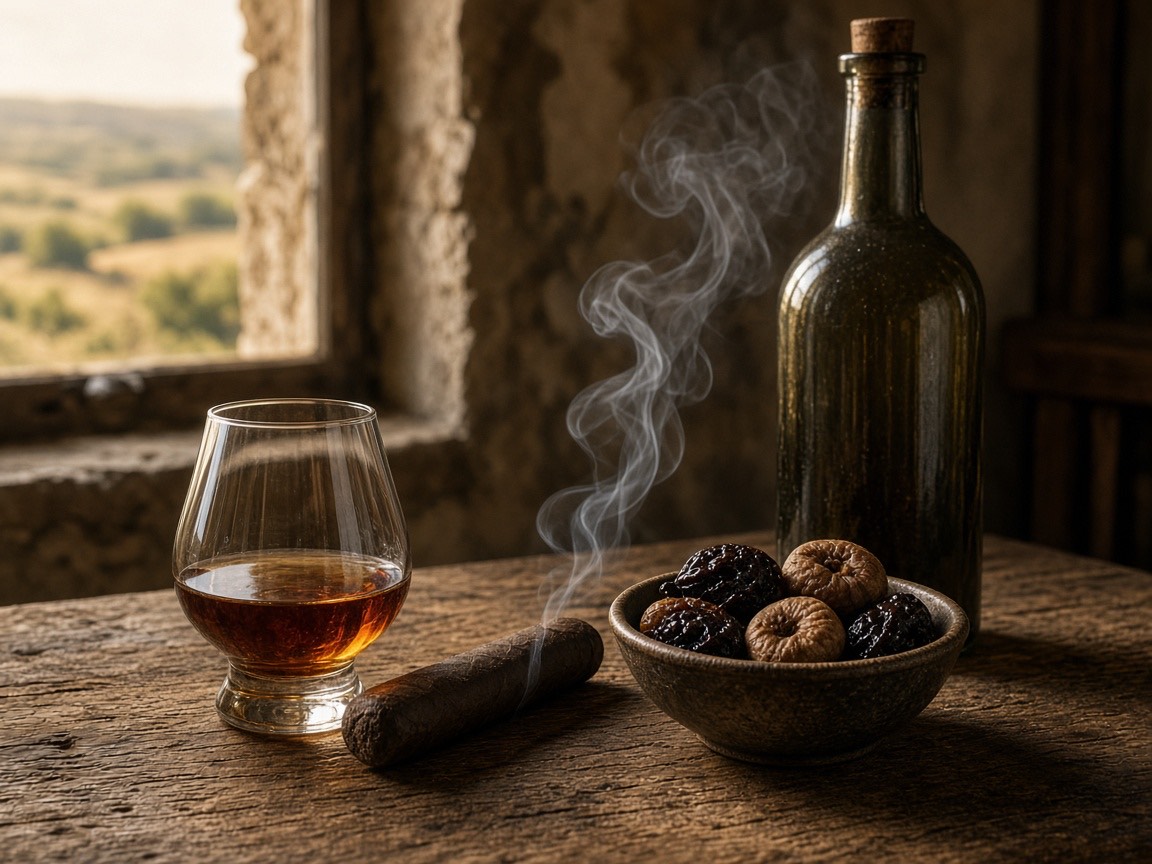
Armagnac is bigger and earthier than cognac. Expect prunes, dried figs, raisins, toffee and dark caramel, with notes of leather, tobacco, licorice, walnut and spice. The finish is long and warming. Old Bas-Armagnacs can be incredibly complex, with an almost savoury rancio. Ténarèze bottlings tend to be more powerful and woody.
What to Look for in a Cigar
In our brandy pairing guide we said armagnac requires a more edgy cigar than cognac. That still holds.
Strength: Medium-full to full. Armagnac's intensity and long finish will overwhelm a mild cigar.
Wrapper: Habano, Sumatra and maduro wrappers all work. We'd generally avoid lighter Connecticut wrappers and delicate, grassy profiles. Many Cubans also feel a little too gentle here, though a fuller Cuban can still work.
Flavours to look for: Earth, wood, leather, dark chocolate, coffee, a hint of spice and, if you can find it, dried fruit. These echo armagnac's prune and fig notes and stand up to its tannic grip.
Example cigars:
- Rocky Patel Vintage 1992 – an aged Sumatra wrapper with cedar, cocoa and spice. A great everyday armagnac cigar.
- Alec Bradley Tempus – medium to full, with earth, wood and dark fruit. Lovely with a VSOP or young vintage.
- Padrón 1964 Anniversary Exclusivo (Natural) – rich, earthy and complex, with cocoa and coffee. A match for an old Bas-Armagnac.
Armagnac also pairs well with a long smoke. A slow-sipping vintage armagnac and a churchill can carry you through a whole evening.
Browse our armagnac and cigar pairings, including 1973 Château de Laubade with Espinosa 601 Blue Label and Larressingle XO with Hoyo de Monterrey Epicure Especial.