Cognac: Origin, Production, and Cigar Pairing
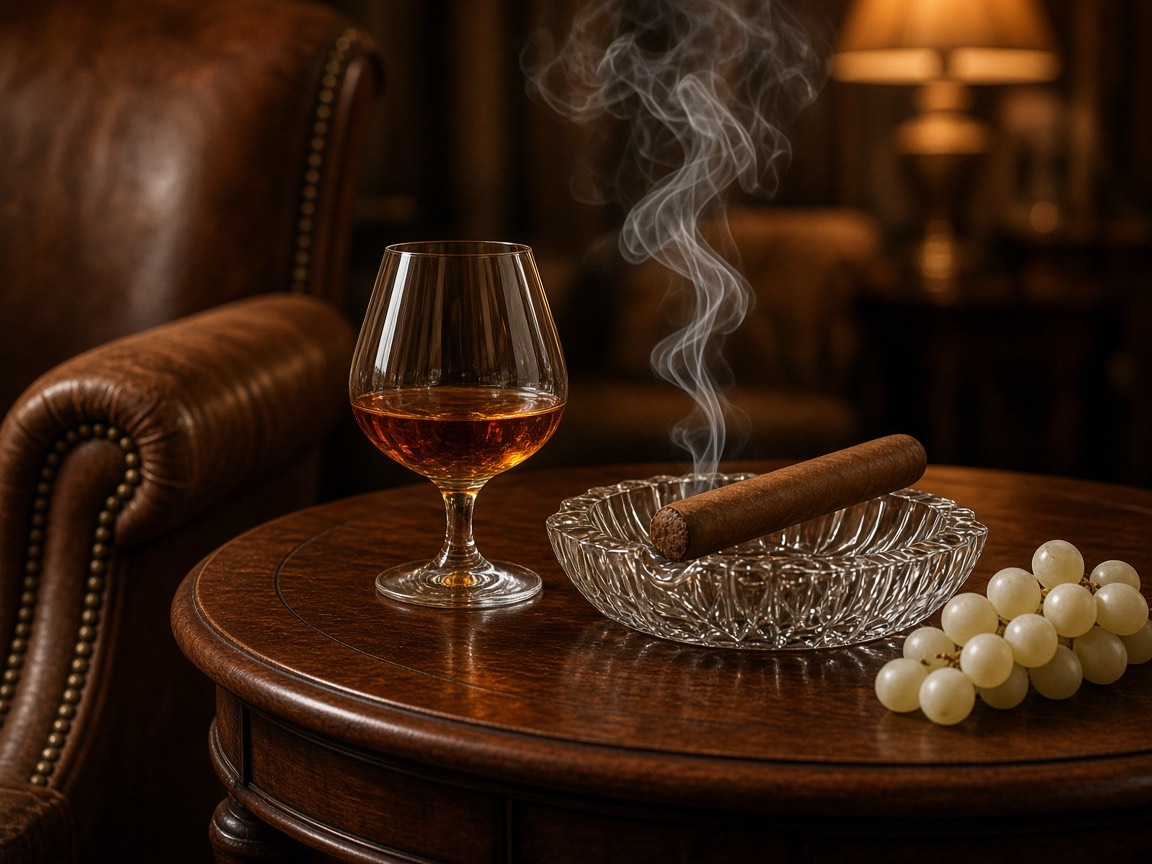
Cognac and cigars are one of the great traditional pairings. Picture a leather armchair, a balloon glass and a long Cuban. There's a reason the image has lasted: a good cognac has the fruit, spice and silky texture to make a fine cigar taste even better. Here's how it's made and what to look for when you pick a smoke to go with it.
Origin
Cognac owes its existence to Dutch traders. In the 1500s and 1600s, Dutch ships sailed up the Charente river to buy salt and wine. The thin, acidic local wine didn't survive the sea voyage well, so traders began distilling it into brandewijn, "burnt wine," which kept far better and could be watered back down on arrival. That word became "brandy."
Local producers soon discovered that distilling twice made a smoother spirit, and that the spirit improved dramatically when left in oak barrels. In the 1700s, the great cognac houses were founded: Martell in 1715, Rémy Martin in 1724, and Hennessy in 1765, started by Richard Hennessy, an Irish officer serving in the French army. The cognac region was officially defined in 1909, and the appellation was protected in 1936.
Where It's Traditionally Made
Cognac can only come from a defined area around the town of Cognac, in the Charente and Charente-Maritime departments of southwestern France. The region is divided into six growing areas, or crus, based on soil:
- Grande Champagne and Petite Champagne – chalky soils that produce the finest, longest-lived, most floral spirits. (The name comes from the chalky landscape, not the sparkling wine region.)
- Borderies – the smallest cru, known for nutty, violet-scented spirits.
- Fins Bois, Bons Bois and Bois Ordinaires – rounder, fruitier spirits that mature faster.
"Fine Champagne" on a label means a blend of Grande and Petite Champagne, with at least half from Grande Champagne.
How It's Made
Cognac is made almost entirely from Ugni Blanc grapes, which produce a light, acidic, low-alcohol wine that's ideal for distilling. The wine is distilled twice in traditional copper Charentais alembic pot stills. The first distillation produces the brouillis at around 28 to 32% alcohol. The second, the bonne chauffe, produces a clear spirit of about 70%. By law, distillation must finish by March 31 following the harvest.
The new spirit is then aged in French oak barrels, traditionally from the Limousin or Tronçais forests. Over the years it slowly loses alcohol and volume to evaporation, the famous "angels' share." Cellar masters blend spirits of different ages and crus to create each house style. The youngest spirit in the blend determines the age grade:
- VS (Very Special) – at least 2 years in oak
- VSOP (Very Superior Old Pale) – at least 4 years
- XO (Extra Old) – at least 10 years
Many XO and "Hors d'Âge" blends contain spirits much older than the minimum.
What It Tastes Like
Young cognacs are fruity and lively, with fresh grape, pear, apricot, vanilla and a little spice. VSOPs add dried fruit, caramel, honey and toasted oak. Old XOs develop rancio, a prized savoury complexity with notes of walnut, mushroom, leather, candied orange, cigar box and old wood.
What to Look for in a Cigar
As we wrote in our brandy pairing guide, cognac is a strong drink that can handle a delicate cigar. It shouldn't be paired with something too dark or overpowering. You don't need to sacrifice flavour, you just need to choose the right one.
Strength: Medium is the sweet spot. Mild cigars can work with a VS. Medium to medium-full suits VSOP and XO, especially older, rancio-heavy cognacs, which have more depth.
Wrapper: Cameroon, Connecticut and Cuban wrappers are classic choices. They bring cedar, cream and gentle spice without burying the fruit. Be cautious with heavy maduros, which can turn a cognac flat and bitter.
Flavours to look for: Cedar, milk chocolate, baking spice, toasted nuts, honey and floral notes. These complement cognac's fruit and oak and bring out the candied orange and vanilla.
Example cigars:
- Arturo Fuente Hemingway – the Cameroon wrapper's cedar and sweet spice are lovely with a VSOP.
- Montecristo No. 2 – a Cuban classic with cedar, cocoa and coffee. Pair it with an XO for a traditional after-dinner experience.
- Romeo y Julieta 1875 – mild to medium and creamy, an easy match for a VS or a lighter Fins Bois cognac.
Serve cognac at room temperature in a tulip glass rather than a big balloon snifter, which tends to concentrate the alcohol vapours. And give it a few minutes in the glass before your first sip.
Browse our cognac and cigar pairings, including Courvoisier 12 with Vegas Robaina and Audrey cognac with Torano Exodus 1959.