Rum: Origin, Production, and Cigar Pairing
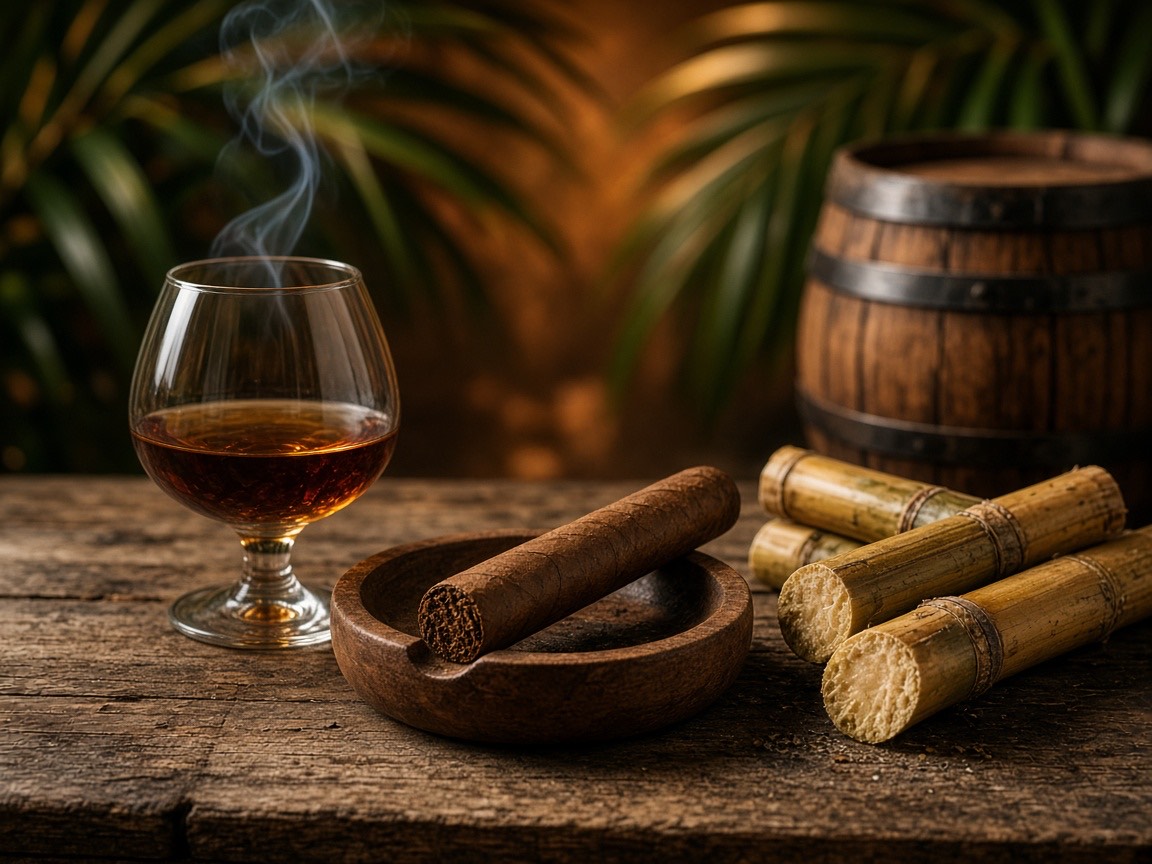
Rum and cigars grow up in the same neighbourhood. Sugar cane and tobacco thrive in the same tropical climates, and many of the best rums come from countries that also make world-class cigars: Cuba, the Dominican Republic and Nicaragua. It's no surprise that a good aged rum is one of the most natural cigar pairings there is.
Origin
Christopher Columbus brought sugar cane to the Caribbean on his second voyage in 1493, and sugar plantations spread across the islands. Making sugar leaves behind huge amounts of a sticky by-product called molasses. In the 1600s, on the plantations of Barbados, someone discovered that molasses could be fermented and distilled. A 1651 account describes the result, "Rumbullion, alias Kill-Divill," as "a hot, hellish, and terrible liquor." The name was shortened to rum.
Rum's history is inseparable from the colonial sugar trade and the enslavement of millions of Africans who worked the plantations. It's an uncomfortable story, but an important one to acknowledge. Rum also became the drink of the Royal Navy, which issued sailors a daily ration from 1655 until "Black Tot Day" on July 31, 1970. Mount Gay in Barbados, with records dating back to 1703, is widely regarded as the oldest rum brand still operating.
Where It's Traditionally Made
Rum is made all over the world, but its heartland is the Caribbean and Latin America. Different colonial histories produced three broad styles:
- Spanish style (Cuba, Puerto Rico, the Dominican Republic, Venezuela, Panama, Nicaragua, Guatemala) – lighter, smoother rums, mostly from column stills. Think Havana Club, Brugal, Diplomático, Flor de Caña and Ron Zacapa.
- English style (Jamaica, Barbados, Guyana) – heavier, more flavourful rums, often from pot stills. Jamaican rum is famous for its "funky" tropical fruit character. Appleton Estate, Mount Gay and El Dorado are classics.
- French style (Martinique, Guadeloupe) – rhum agricole, made from fresh sugar cane juice rather than molasses. Martinique's rhum agricole has had its own protected appellation since 1996. Rhum J.M, Clément and Neisson are well-known producers.
How It's Made
Most rum starts with molasses, which is diluted with water and fermented. Fermentation can take a day or two for light rums, or several weeks for heavy Jamaican styles, which develop intense fruity esters. Rhum agricole is made from freshly pressed cane juice, which gives it a grassy, vegetal character.
The fermented "wash" is distilled in column stills (lighter, cleaner rum), pot stills (heavier, more flavourful rum), or both, then blended. Aged rums are usually matured in ex-bourbon barrels. In the tropical heat, rum ages much faster than whisky does in Scotland, and much more is lost to evaporation each year.
Unlike Scotch or cognac, rum has no single set of global rules. Each country sets its own standards, and some have very few. Watch out for numbers on labels: a "23" on a solera rum like Ron Zacapa doesn't mean every drop is 23 years old. Some rums also contain added sugar, which can make them taste sweeter and heavier than the age suggests.
What It Tastes Like
Light Spanish-style rums are clean and gently sweet, with vanilla and a little fruit. Aged Spanish-style rums add caramel, toffee, cocoa, coffee and dried fruit. English-style rums are bolder, with banana, pineapple, molasses, baking spice and sometimes a funky, overripe fruit note. Rhum agricole is grassy, peppery and floral when young, and develops into something cognac-like with age.
What to Look for in a Cigar
Rum may be the easiest spirit to pair with a cigar, but the best pairings still follow the same rules: balance the strength and look for shared flavours.
Strength: Medium to full for aged sipping rums. Many are bottled at 40%, and their sweetness can take a robust cigar. Lighter rums need a mild to medium cigar.
Wrapper: Maduro wrappers are a classic match for dark, aged rums. Their sweetness, cocoa and coffee mirror the molasses and caramel. Habano and Dominican wrappers suit drier, more complex rums. Connecticut wrappers pair well with lighter rums and young rhum agricole.
Flavours to look for: Cocoa, coffee, molasses, cedar, leather and sweet spice. If your rum is very sweet, add contrast with a spicier or earthier cigar so the pair doesn't become cloying.
History: Rum is a great chance to pair by origin. Try a Nicaraguan rum with a Nicaraguan cigar, or a Dominican rum with a Dominican smoke. The parallel histories of Flor de Caña and Oliva in Nicaragua made for one of our favourite early pairings.
Example cigars:
- La Aurora 107 – medium to full and well balanced, with cedar, leather and spice. We loved it with Ron Zacapa 23.
- Oliva Serie G Maduro – affordable, sweet and chocolatey. A perfect match for Diplomático Reserva Exclusiva or Appleton Estate 12.
- Macanudo Cafe – mild and creamy, a smart choice for lighter rums or a young rhum agricole on a hot afternoon.
Browse all our rum and cigar pairings, including Flor de Caña 18 with Oliva Serie V and Ron Zacapa 23 with Bolivar Exclusivo Canada.