
Tequila: Origin, Production, and Cigar Pairing
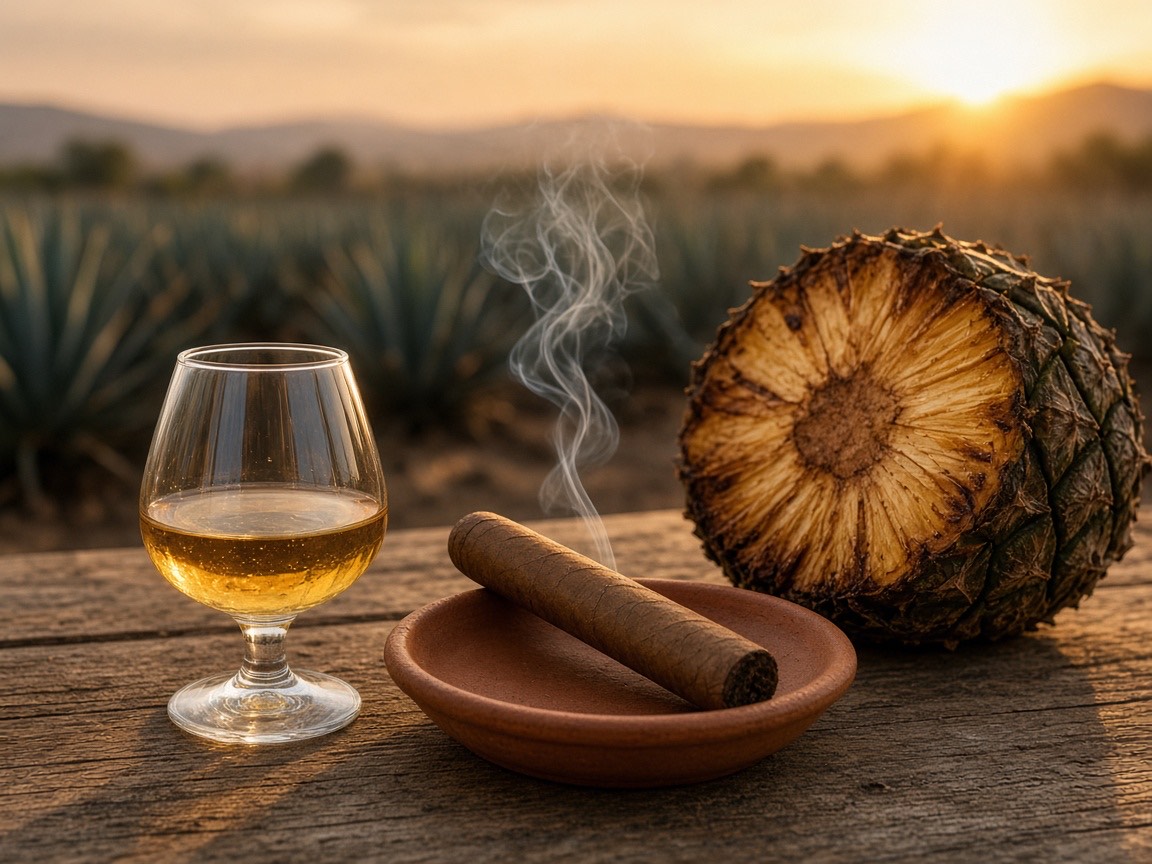
Most people's first tequila memory involves salt, lime and regret. Good tequila is a different animal entirely. A well-made añejo can be as complex as a fine whisky, and even a crisp blanco can make a surprisingly refreshing cigar partner. Here's how tequila is made and how to match each style with the right smoke.
Origin
Long before tequila, the Aztecs and other peoples of Mexico fermented the sap of the agave plant into pulque, a milky, mildly alcoholic drink with religious significance. When the Spanish arrived in the 1500s, they brought distillation. They began distilling agave into what they called "mezcal wine."
The area around the town of Tequila, in the state of Jalisco, became famous for its agave spirit. In 1758, José Antonio de Cuervo received a land grant there to grow agave, and in 1795 his son received the first official licence to produce it commercially. In 1873, Don Cenobio Sauza became the first to export tequila to the United States, and he helped establish blue agave as the best variety. Mexico declared tequila a protected designation of origin in 1974.
Where It's Traditionally Made
Tequila can only be made in Mexico, in the state of Jalisco and in certain municipalities of Guanajuato, Michoacán, Nayarit and Tamaulipas. Within Jalisco there are two main growing areas:
- The Highlands (Los Altos) – red, iron-rich soil and cooler temperatures produce larger, sweeter agave. Highland tequilas tend to be fruity, floral and soft.
- The Lowlands (Tequila Valley) – volcanic soil gives earthier, more herbal and peppery tequilas.
How It's Made
All tequila must be made from blue Weber agave (Agave tequilana). Agave is not a cactus. It's a succulent that takes roughly six to eight years to mature. When it's ready, skilled harvesters called jimadores cut away the long, spiky leaves to reveal the heart, or piña, which can weigh 40 kilograms or more.
The piñas are cooked to turn their starches into fermentable sugars. Traditionally this was done slowly in brick ovens (hornos). Many producers now use faster steel autoclaves, and some use industrial diffusers, which many purists feel strip out flavour. The cooked agave is crushed to extract the juice. A few traditional producers still use a tahona, a huge volcanic stone wheel. The juice is fermented and then distilled at least twice.
Look for "100% agave" on the label. Tequila without it is a "mixto," which only needs to contain 51% agave sugars. The rest can come from other sugars. Tequila is then classified by aging:
- Blanco (or Plata) – unaged, or rested for less than two months
- Reposado ("rested") – aged 2 months to under a year in oak
- Añejo ("aged") – 1 to 3 years in oak barrels of no more than 600 litres
- Extra Añejo – at least 3 years in oak
Ex-bourbon barrels are the most common, though some producers use wine, sherry or cognac casks.
What It Tastes Like
Blanco is the purest expression of the agave: cooked agave, citrus, black pepper, green herbs and sometimes a mineral, briny note. Reposado keeps that agave character and adds vanilla, caramel and a soft oakiness. Añejo and extra añejo become rich and smooth, with butterscotch, toasted oak, dried fruit, chocolate and baking spice, sometimes drinking more like a fine bourbon or cognac.
What to Look for in a Cigar
With tequila, the age statement tells you almost everything you need to know about your cigar choice.
Blanco: Keep the cigar mild to medium so the agave can shine. Connecticut and Ecuadorian wrappers with cream, citrus and light pepper complement blanco's brightness. Heavy maduros tend to clash with the vegetal agave. Try a Perdomo Reserve 10th Anniversary Champagne.
Reposado: Step up to medium. Habano and Sumatra wrappers with cedar, light spice and a little sweetness pick up the vanilla and oak while respecting the agave. A Rocky Patel Decade is a good match.
Añejo and Extra Añejo: Treat these like a bourbon. Medium-full cigars with cocoa, coffee, caramel and leather all work, and maduros are now fair game. Try a Herrera Estelí Norteño, which uses a Mexican San Andrés wrapper for a pairing with a little shared heritage.
Mexican tobacco: Speaking of heritage, Mexico's San Andrés valley grows a dark, earthy wrapper tobacco used on many popular maduro cigars. Pairing an aged tequila with a San Andrés-wrapped cigar is a fun way to bring the history element into your pair.
A few tips:
- Sip good tequila neat from a small tulip glass or a traditional copita. Skip the salt and lime.
- Blanco and a mild cigar make a fantastic warm-weather pairing. Try a chilled blanco on the patio.
- Mixtos and cheap tequilas are harsh and won't do any cigar justice. Stick to 100% agave.
Want something smokier? Read our mezcal pairing guide, or learn the basics of how we pair.