Scotch Whisky: Origin, Production, and Cigar Pairing
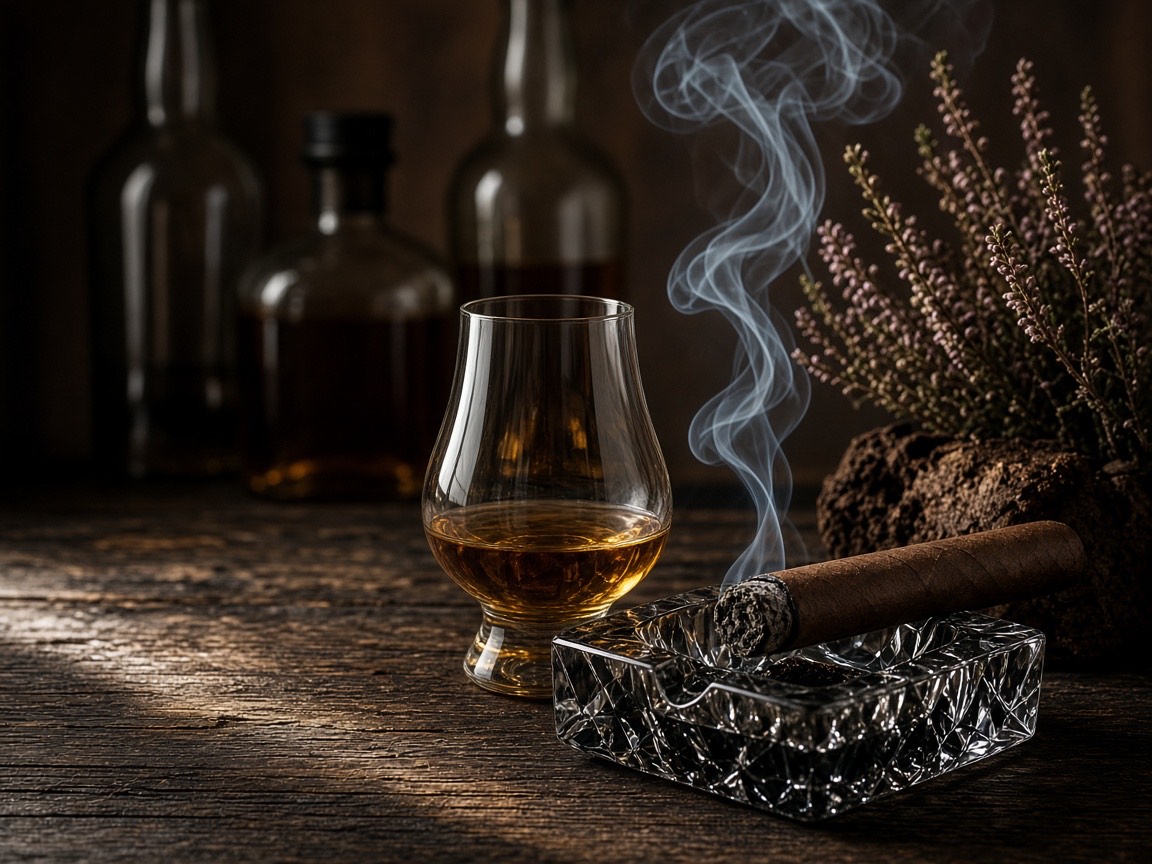
Scotch is the drink that started most of our pairing nights, and it's still the one we reach for most often. It's also one of the most varied spirits on the planet. A gentle Lowland malt and a peat-soaked Islay dram are both "Scotch," but they call for very different cigars. Here's a primer on where it comes from, how it's made, and how to pick a cigar that makes it sing.
Origin
The first written record of Scotch whisky appears in the Scottish Exchequer Rolls of 1494, which list "eight bolls of malt to Friar John Cor wherewith to make aqua vitae." Aqua vitae, "water of life," became uisge beatha in Gaelic, and eventually just "whisky."
For centuries most distilling was small, rural and often illegal. The Excise Act of 1823 made licensed distilling affordable, and many of the distilleries we know today were founded in the decades that followed. Two events then turned Scotch into a global drink: Aeneas Coffey's continuous column still (patented in 1830), which made lighter grain whisky for blending, and the phylloxera plague that wiped out French vineyards in the late 1800s, leaving cognac drinkers looking for something new.
Where It's Traditionally Made
By law, Scotch must be distilled and matured in Scotland. The whisky regions are a useful shorthand for flavour:
- Speyside – the heart of malt whisky, with the most distilleries. Elegant, fruity and often sherried. Think Macallan, Glenfiddich, Aberlour and Balvenie.
- Highlands – a huge region with huge variety, from honeyed and floral to rich and lightly smoky. Glenmorangie, Dalmore, Oban and Dalwhinnie.
- Lowlands – traditionally lighter, softer and grassy, often triple distilled. Auchentoshan and Glenkinchie.
- Islay – the island of peat smoke, seaweed and iodine. Laphroaig, Ardbeg and Lagavulin.
- Campbeltown – once the whisky capital of the world, now home to just a few distilleries. Briny, oily and a little smoky. Springbank and Glen Scotia.
You'll also hear about the "Islands" (Highland Park, Talisker, Jura), which are officially part of the Highland region but have a coastal, often smoky character of their own.
How It's Made
Single malt Scotch starts with just three ingredients: malted barley, water and yeast. The barley is soaked and allowed to germinate, then dried in a kiln. If the kiln is fired with peat, the smoke soaks into the grain. That's where Islay's medicinal smokiness comes from.
The dried malt is ground, mixed with hot water to release its sugars, and fermented into a beer-like "wash" of around 8% alcohol. The wash is then distilled, usually twice, in copper pot stills. The shape of those stills has a big influence on how heavy or light the final spirit is.
The new spirit goes into oak casks, most often ex-bourbon barrels or ex-sherry butts, and must age for at least three years in Scotland. The age on the label is the age of the youngest whisky in the bottle. You'll see five categories: Single Malt (one distillery, malted barley, pot stills), Single Grain, Blended Malt, Blended Grain, and Blended Scotch, which is the vast majority of what's sold.
What It Tastes Like
Bourbon-cask Scotch leans toward vanilla, honey, citrus and orchard fruit. Sherry casks add dried fruit, Christmas cake, cinnamon and chocolate. Peat brings smoke, iodine, tar and sea spray. Older whiskies gain depth and lose some fire. Cask-strength bottlings can run past 55% and need a cigar with the muscle to stand up to them.
What to Look for in a Cigar
Pairing Scotch is really about pairing the style of Scotch, so start by figuring out which family your bottle belongs to.
Light and floral (Lowland, lighter Highland and Speyside): Choose a mild to medium cigar so you don't bulldoze the whisky. Connecticut shade or Cameroon wrappers with cream, cedar, nuts and a touch of sweetness work beautifully. Try an Arturo Fuente Hemingway (Cameroon wrapper, cedar and gentle spice).
Sherried and rich (Macallan, Aberlour A'bunadh, Glendronach): Here you can go medium to full. Look for Habano or Maduro wrappers with cocoa, dried fruit, coffee and leather, which echo the sherry cask. A Padrón 1964 Anniversary Maduro is a classic match.
Peated (Islay, Talisker, Highland Park): You have two options. Complement the smoke with a full-bodied, earthy cigar, or contrast it with a sweet maduro that brings out the honey hiding under the peat. The Drew Estate Liga Privada No. 9 (Connecticut broadleaf, dark chocolate, earth) handles even Laphroaig. For more spice, an Oliva Serie V works too.
A few tips:
- Add a few drops of water to cask-strength whisky. It opens up the aromas and stops the alcohol from burning out your palate between puffs.
- Strength matters in both directions. A 46% Islay malt will flatten a delicate Connecticut, and a full-bodied maduro will smother a 12-year Lowlander.
- Sip, puff, then sip again. The second sip after the cigar is where you find out if the pair actually works.
For more on whisky styles, see our Whisky 101 guide, and browse all of our Scotch and cigar pairings, including the Laphroaig 18 and San Cristobal and Aberlour 18 and OpusX reviews.