Bourbon: Origin, Production, and Cigar Pairing
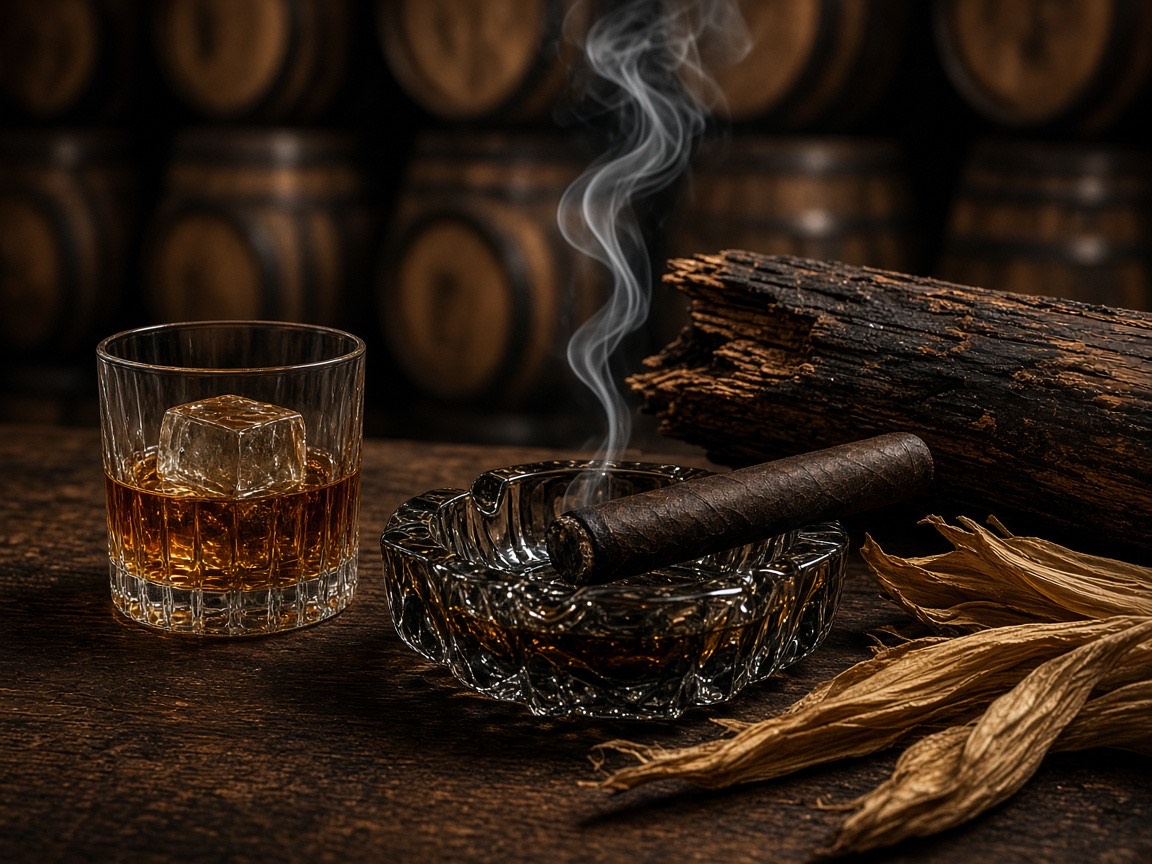
If Scotch is the dram we contemplate, bourbon is the one we pour when friends come over. It's sweet, approachable and full of the same caramel, vanilla and toasted oak flavours you find in a good cigar, which makes it one of the easiest spirits to pair. Here's what makes bourbon bourbon, and how to find its perfect smoke.
Origin
Bourbon was born on the American frontier in the late 1700s. Scots-Irish and German settlers moving into Kentucky, then still part of Virginia, brought distilling know-how with them. They found that corn grew far better there than the barley and rye they were used to. Whiskey was an easy way to turn a bulky grain harvest into something that kept and travelled well.
The name most likely comes from Bourbon County in Kentucky, or from Bourbon Street in New Orleans, where much of the whiskey shipped down the Ohio and Mississippi rivers was sold. Popular stories credit Baptist preacher Elijah Craig with inventing the charred barrel, but there's no real evidence for it. Bourbon's rules were firmed up over time: the Bottled-in-Bond Act of 1897 guaranteed quality, and in 1964 Congress declared bourbon "a distinctive product of the United States."
Where It's Traditionally Made
Bourbon can legally be made anywhere in the United States, but Kentucky produces the overwhelming majority of it. The limestone-filtered water, hot summers and cold winters are credited with shaping its character. Bardstown, Louisville, Frankfort and Lawrenceburg are home to names like Buffalo Trace, Maker's Mark, Wild Turkey, Four Roses, Heaven Hill and Woodford Reserve.
Tennessee whiskey, like Jack Daniel's, is made almost exactly the same way. Its defining extra step is the Lincoln County Process: the new spirit is filtered through sugar-maple charcoal before it goes into the barrel.
How It's Made
US law sets out strict rules for bourbon:
- The mash must contain at least 51% corn. The rest is usually rye or wheat, plus a little malted barley.
- It must be distilled to no more than 80% alcohol (160 proof).
- It must be aged in new, charred oak containers, and go into the barrel at no more than 62.5% (125 proof).
- It must be bottled at 40% (80 proof) or more, with nothing added except water.
Most distillers use a "sour mash" process, where a portion of the previous batch goes into the new fermentation to keep things consistent. The beer is usually distilled first in a tall column still, then a second time in a "doubler" or "thumper."
Because the barrels are brand new and heavily charred, bourbon picks up colour and flavour quickly. Barrels age in multi-storey rickhouses, where Kentucky's temperature swings push the spirit in and out of the wood. "Straight bourbon" must be aged at least two years, and if it's under four years old the age has to appear on the label. "Bottled-in-bond" means a single distillery, a single season, at least four years old and exactly 100 proof.
What It Tastes Like
Caramel, vanilla, toffee, toasted oak and baking spice are the backbone of every bourbon. The "mash bill" fine-tunes the profile:
- Wheated bourbons (Maker's Mark, Weller, Larceny) are soft, round and sweet.
- High-rye bourbons (Four Roses, Basil Hayden, Bulleit) are spicier, drier and peppery.
- Barrel-proof bourbons can top 60% alcohol and are intensely rich, with dark caramel, cherry and leather.
What to Look for in a Cigar
Bourbon and cigars share so many flavours that it's easy to make a good pair. The trick to a great pair is matching the strength and steering the sweetness.
Strength: Most bourbons are medium to full, so start with a medium to full-bodied cigar. A mild Connecticut can work with a soft, wheated bourbon, but it will disappear next to barrel proof.
Wrapper: Maduro wrappers bring natural sweetness, cocoa and coffee that mirror bourbon's caramel. Habano and Nicaraguan wrappers add pepper that lines up with high-rye bourbons. Connecticut and Ecuadorian shade wrappers suit lighter, wheated bottles.
Flavours to look for: Cocoa, coffee, molasses, cedar, toasted nuts and leather all complement bourbon. If your bourbon is very sweet, contrast it with a spicier, earthier cigar to keep the pair from becoming cloying.
Example cigars:
- Padrón 3000 Maduro – medium to full, with cocoa and coffee that lock onto bourbon's caramel. Excellent with Buffalo Trace or Woodford Reserve.
- My Father Le Bijou 1922 – full-bodied Nicaraguan with pepper and dark chocolate, built for barrel proof and high-rye bourbons.
- Perdomo Reserve 10th Anniversary Champagne – a smooth Connecticut that's aged in bourbon barrels, a natural match for wheated bourbons like Maker's Mark.
One more tip: a big, cask-strength bourbon is much easier to pair once you add a splash of water or a single large ice cube. It tames the heat without losing the sweetness.
Browse our bourbon and cigar pairings, including Maker's Mark with the Maker's Mark 650 cigar and Basil Hayden with Four Kicks, or read our Whisky 101 guide.