Irish Whiskey: Origin, Production, and Cigar Pairing
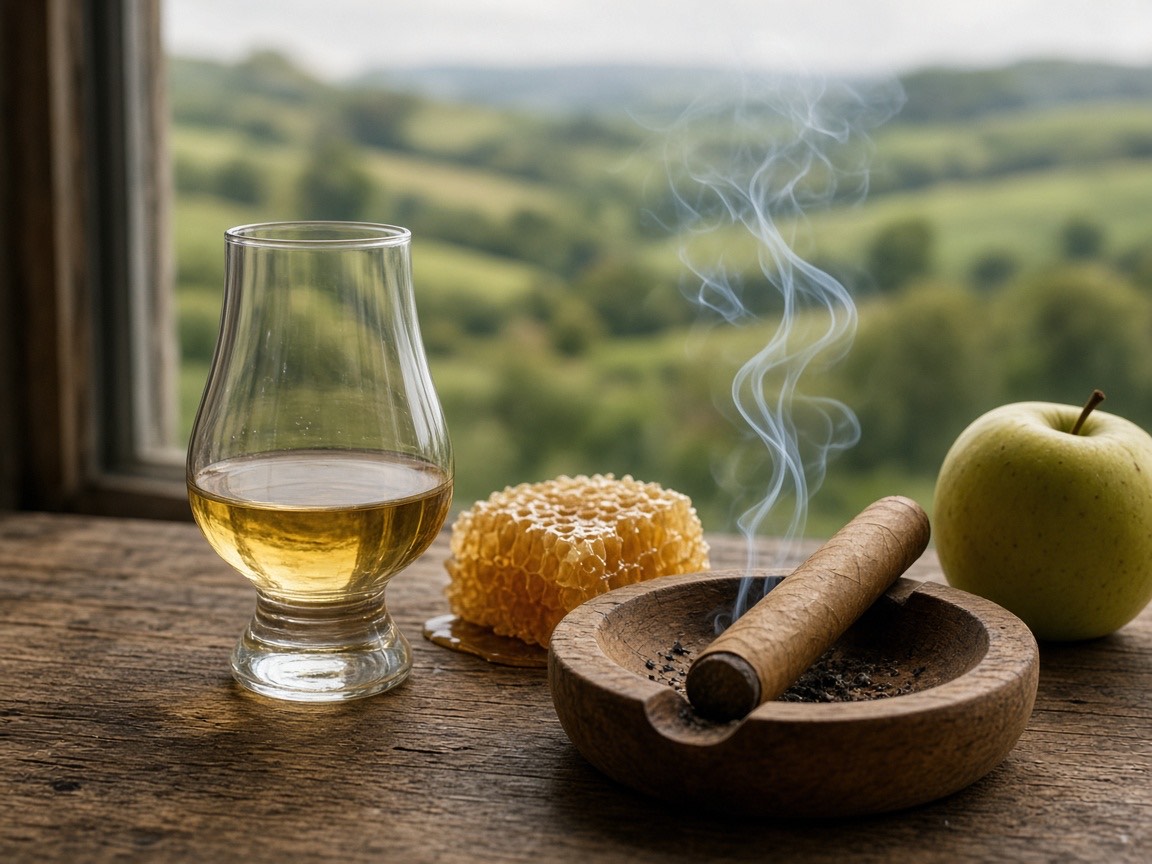
Irish whiskey has a reputation for being smooth, and it's well earned. Most of it is unpeated and many bottles are triple distilled, which makes it soft, honeyed and easy to sip. That gentleness is exactly why it rewards a thoughtful cigar choice. Pick the wrong stick and you'll never taste the whiskey at all.
Origin
Ireland has a strong claim to being the birthplace of whiskey. Legend says Irish monks brought distilling back from the Mediterranean in the early Middle Ages. The first written record comes from the Annals of Clonmacnoise in 1405, which note that a chieftain died after "taking a surfeit of aqua vitae" at Christmas. Old Bushmills in County Antrim traces its licence back to 1608.
By the 19th century, Irish whiskey was the most popular whiskey in the world, and Dublin's huge distilleries dwarfed anything in Scotland. Then came a string of disasters: the Irish War of Independence, a trade war with Britain that closed off the Empire, and American Prohibition. By the 1970s only two distilleries were left in all of Ireland, Midleton and Bushmills. The comeback since then has been remarkable, and the island is now home to dozens of distilleries again.
Where It's Traditionally Made
Irish whiskey must be distilled and aged on the island of Ireland, in either the Republic or Northern Ireland. Big names include Jameson, Redbreast, Powers and Green Spot (all from Midleton in County Cork), Bushmills in County Antrim, and Tullamore D.E.W. in County Offaly. Newer distilleries like Teeling in Dublin and Waterford in the southeast are pushing the category in new directions.
How It's Made
Irish whiskey can be made from any cereal grain. It must be distilled to no more than 94.8% alcohol, aged for at least three years in wooden casks in Ireland, and bottled at 40% or more. There are four official styles:
- Single Malt – 100% malted barley from one distillery, usually in pot stills. Bushmills 10 and 16 are good examples.
- Single Pot Still – uniquely Irish. A mash of both malted and unmalted barley distilled in pot stills, which gives a creamy, oily texture and spicy kick. Redbreast and Green Spot are the classics.
- Single Grain – made mostly from corn or wheat in column stills. Light and sweet.
- Blended – a mix of two or more of the above. Jameson and Tullamore D.E.W. are blends.
Triple distillation isn't required, but it's traditional at many distilleries and produces a lighter, purer spirit. Most Irish malt is dried in closed kilns rather than over peat fires, so the whiskey rarely has the smokiness of Scotch. Aging usually happens in ex-bourbon barrels, often finished in sherry, port or even stout casks.
What It Tastes Like
Expect honey, vanilla, green apple, pear, light cereal and a gentle spice. Single pot still whiskeys add a creamy mouthfeel with clove, ginger and dried fruit. Older and sherry-finished bottles bring toffee, nuts and Christmas cake. Overall, Irish whiskey is lighter and sweeter than most Scotch and less oaky than bourbon.
What to Look for in a Cigar
Irish whiskey's delicacy is the key. You want a cigar that adds to it rather than smothers it.
Strength: Mild to medium for blends and lighter single malts. You can step up to medium, or even medium-full, for single pot still and older sherry-finished whiskeys.
Wrapper: Connecticut shade and Cameroon wrappers are ideal. They bring cream, cedar and a light sweetness that lines up with the whiskey's honey. Save dark maduros for the richest pot still bottlings.
Flavours to look for: Cream, toasted nuts, cedar, light baking spice and a hint of floral sweetness. Avoid heavy pepper and earth, which overpower the whiskey's fruit.
Example cigars:
- Ashton Classic – a smooth, creamy Connecticut shade cigar that pairs effortlessly with Jameson or Bushmills Original.
- Arturo Fuente Hemingway Short Story – Cameroon wrapper with cedar and gentle spice, ideal for a 30 to 45 minute dram of single malt.
- Oliva Serie G – medium-bodied with a Cameroon wrapper and notes of nuts and leather, sturdy enough for Redbreast 12 or Green Spot.
Irish whiskey is also a good choice for a morning or early afternoon smoke, when a full-bodied pairing would be too much.
Browse our Irish whiskey and cigar pairings, including Bushmills 16 with the Julius Caesar Robusto and Jameson Gold Reserve with Alec Bradley Filthy Hooligan, or read our Whisky 101 guide.