Japanese Whisky: Origin, Production, and Cigar Pairing
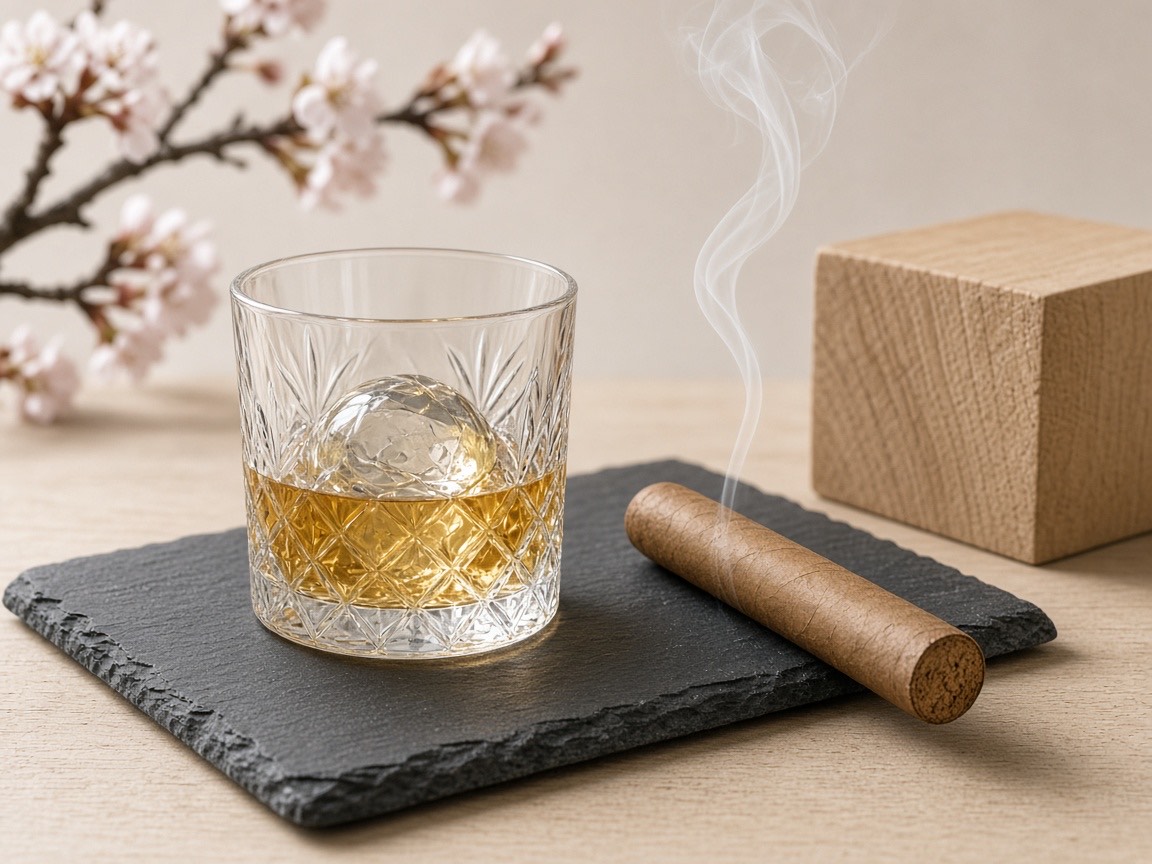
Japanese whisky has gone from a curiosity to one of the most sought-after spirits in the world in about twenty years. It owes a lot to Scotland, but it has developed its own personality: precise, balanced and often remarkably delicate. That subtlety makes it a rewarding, if slightly tricky, partner for a cigar.
Origin
The story of Japanese whisky begins with two men. Masataka Taketsuru, the son of a sake-brewing family, travelled to Scotland in 1918 to study chemistry at the University of Glasgow and apprentice at Scotch distilleries. He came home in 1920 with a notebook full of techniques and a Scottish wife, Rita.
Shinjiro Torii, a businessman whose company would become Suntory, hired Taketsuru to build Japan's first commercial malt whisky distillery. It was built in Yamazaki, near Kyoto, in 1923, and the first Japanese whisky went on sale in 1929. Taketsuru later struck out on his own and in 1934 founded the Yoichi distillery on the northern island of Hokkaido. He chose the site because its cool, damp climate reminded him of Scotland. His company became Nikka.
For decades, Japanese whisky was mostly drunk at home, often in highballs. Then a run of international awards in the 2000s turned it into a global sensation, and aged bottles became so scarce that many were discontinued.
Where It's Traditionally Made
The most famous distilleries are Suntory's Yamazaki (near Kyoto) and Hakushu (in the forested mountains of Yamanashi), and Nikka's Yoichi (Hokkaido) and Miyagikyo (near Sendai). Newer craft distilleries like Chichibu, Mars Shinshu and Akkeshi have earned cult followings.
For years, Japan had almost no legal definition of whisky, and some bottles labelled "Japanese whisky" contained imported spirit. In 2021, the Japan Spirits & Liqueurs Makers Association adopted standards, fully in effect since 2024. To use the term, a whisky must be made from malted grain (other grains are allowed) using water from Japan. It must be fermented, distilled and aged in Japan, for at least three years in wooden casks, and bottled in Japan at 40% or more.
How It's Made
Production closely follows Scotch: malted barley, fermentation, distillation in copper pot stills (column stills for grain whisky), and oak aging. The big difference is how the industry is set up. Scottish blenders trade whisky freely between distilleries. Japanese companies traditionally don't, so each distillery learned to make many different styles in-house. They use a range of still shapes, yeasts, peating levels and cask types to build blends entirely from their own stock.
Japanese distillers also use a rare native oak, mizunara. It's difficult to work with and prone to leaking, but it gives aged whisky a distinctive aroma of sandalwood, incense and coconut. Yoichi still heats some of its stills with coal fires, an old technique that adds weight and a slight smokiness.
What It Tastes Like
The house style is clean and balanced rather than bold. Expect honey, orchard fruit, citrus, vanilla and a light floral quality. Mizunara-aged whiskies add sandalwood and a gentle spice. Hakushu has a fresh, herbal, lightly smoky character. Yoichi can be robustly peaty and briny, closer to a coastal Scotch.
What to Look for in a Cigar
Treat most Japanese whisky the way you'd treat a fine Speyside or a lighter cognac. The goal is balance, not power.
Strength: Mild to medium for blends like Hibiki or Toki and for lighter single malts like Yamazaki 12 or Hakushu. Medium to medium-full is fine for peated Yoichi or cask-strength releases.
Wrapper: Connecticut shade and Ecuadorian wrappers suit the delicate, honeyed whiskies. Cuban-style cigars with cedar and a light spice are also excellent, which is why so many Japanese bars stock Cuban cigars.
Flavours to look for: Cedar, cream, toasted almond, a touch of floral sweetness and gentle wood. Avoid heavy pepper and dark, earthy maduros with the lighter whiskies. They erase the subtle fruit and sandalwood that make the whisky special.
Example cigars:
- Davidoff Signature 2000 – refined and mild, with cream and cedar. A good match for Hibiki Harmony.
- Hoyo de Monterrey Excalibur – smooth Connecticut shade, nutty and lightly sweet. Pairs nicely with Yamazaki 12.
- Oliva Serie V Melanio – medium-full and complex, with cedar, cocoa and spice. Sturdy enough for peated Yoichi or Nikka From the Barrel.
Japanese whisky's highball culture is worth trying with a cigar too. A Toki or Kakubin highball with a mild Connecticut makes a refreshing summer patio pairing.
See our Nikka Yoichi and Vegas Robaina pairing, browse all whisky and cigar pairings, or read our Whisky 101 guide.