Gin: Origin, Production, and Cigar Pairing
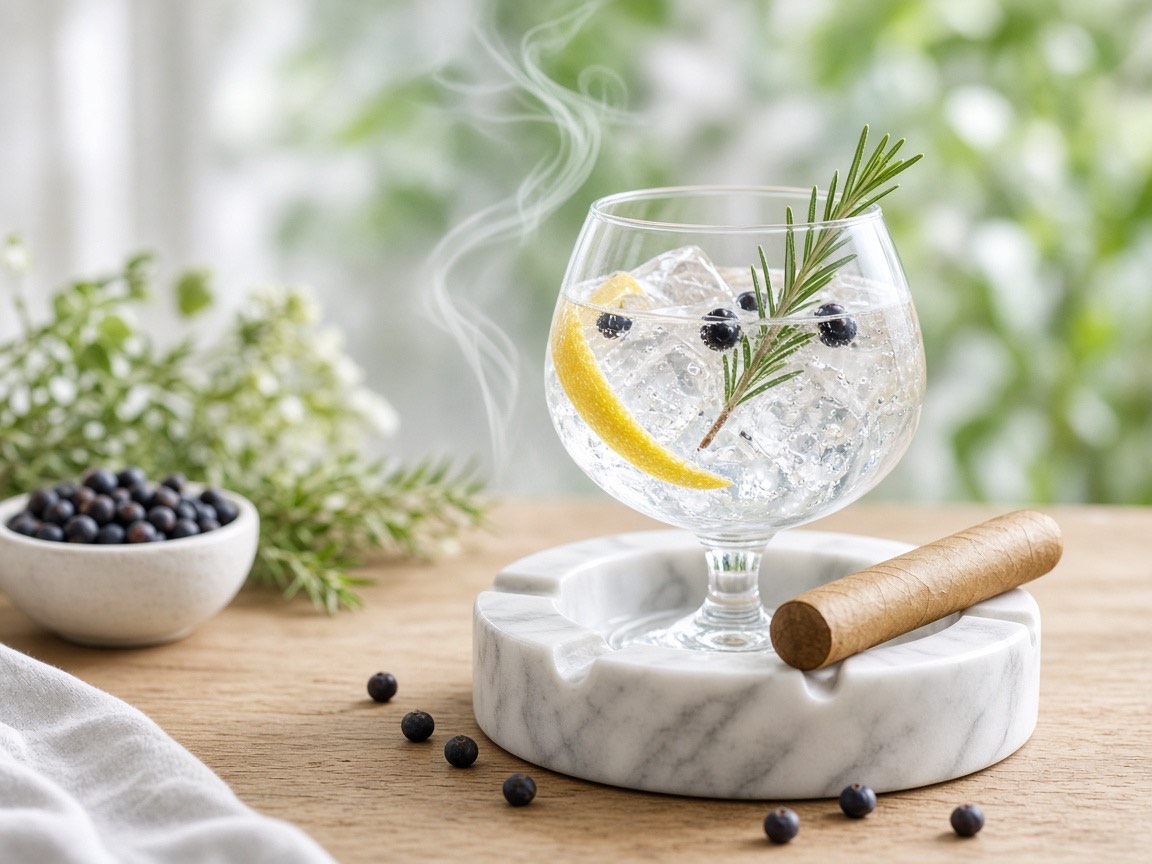
Gin isn't the first spirit most people think of for a cigar, but it deserves a closer look. A crisp London Dry, a softly sweet Old Tom or a malty Dutch genever can each make an interesting pairing. On a hot summer afternoon, a well-made gin and tonic with a light cigar is hard to beat. You just need to choose your cigar with care.
Origin
Gin's ancestor is genever (or jenever), a malty, juniper-flavoured spirit from the Low Countries. Juniper had been used as medicine for centuries, and by the 1500s and 1600s Dutch and Flemish distillers were making genever in quantity. English soldiers fighting alongside the Dutch in the Thirty Years' War are said to have taken a swig before battle, giving us the phrase "Dutch courage."
When the Dutch prince William of Orange took the English throne in 1689, gin came with him. The government encouraged local distilling and taxed French brandy heavily, and London went gin-mad. During the "Gin Craze" of the early 1700s, cheap, rough gin was blamed for widespread social problems, captured in William Hogarth's famous print Gin Lane (1751). A series of Gin Acts eventually brought it under control.
The arrival of the column still in the 1830s made it possible to produce a clean, neutral spirit. That gave rise to the crisp, unsweetened London Dry style. Meanwhile, the British in India mixed their bitter quinine tonic with gin to make it palatable, and the gin and tonic was born.
Where It's Traditionally Made
Gin is now made everywhere, but its traditional homes are:
- The Netherlands and Belgium – genever, which has its own protected status.
- England – especially London, home of Beefeater, Sipsmith and many others. Despite the name, "London Dry" describes a method, not a place, and can be made anywhere. Tanqueray and Bombay Sapphire are distilled outside London.
- Plymouth – Plymouth Gin, an earthier, softer style, has been distilled in the city since 1793.
Since the 2000s, a craft gin boom has produced thousands of new gins worldwide, many using local botanicals.
How It's Made
Most gin starts with a neutral spirit, usually made from grain. It's then flavoured with botanicals, and juniper must be the predominant flavour. Other common botanicals include coriander seed, angelica root, orris root, citrus peel, cassia, cardamom and licorice.
There are two main ways to add the botanicals during redistillation:
- Steeping – the botanicals soak in the spirit, sometimes overnight, and then everything is distilled together.
- Vapour infusion – the botanicals sit in a basket above the spirit, and the rising vapour picks up their aromas. This gives a lighter, more delicate result (Bombay Sapphire is the famous example).
London Dry gin must get all of its flavour from botanicals during distillation, with nothing added afterward except water and a tiny amount of sugar. Other styles include Old Tom (lightly sweetened, popular in the 1800s), Plymouth, New Western or contemporary gins (where juniper takes a back seat to other botanicals), and barrel-aged gins. Genever is made differently, from a base of malt wine (a pot-distilled spirit from malted grain), which gives it a whisky-like body.
What It Tastes Like
London Dry gin is crisp and dry: pine-like juniper, citrus, coriander spice and earthy roots. Old Tom is rounder and sweeter. Contemporary gins can lean floral, herbal, citrusy or spicy, depending on their botanicals. Barrel-aged gins add vanilla and soft oak. Genever is malty and bready, somewhere between gin and a light whisky.
What to Look for in a Cigar
Gin's aromatic botanicals are easy to overwhelm, so the cigar should be light enough to let them through.
Strength: Mild to medium. A full-bodied maduro will flatten a London Dry completely.
Wrapper: Connecticut shade and Cameroon wrappers are ideal. Their cream, cedar and light floral notes complement the juniper and citrus.
Flavours to look for: Cedar, cream, white pepper, citrus, floral and herbal notes. Cedar and juniper are a particularly nice match, since both have a resinous, woody quality.
Neat, tonic or martini? A gin and tonic's bitterness and bubbles refresh the palate between puffs and work well with almost any mild cigar. A martini is stronger and drier, so a creamy Connecticut helps soften it. Barrel-aged gin and genever can be sipped neat and handle a medium cigar.
Example cigars:
- Macanudo Cafe Hyde Park – mild, creamy and smooth, an easy match for a classic gin and tonic.
- H. Upmann Vintage Cameroon – mild to medium with cedar, nuts and a touch of sweet spice. Great with a London Dry martini.
- Brick House – a medium-bodied, Habano-wrapped cigar with cedar and earthy sweetness, sturdy enough for barrel-aged gin or a malty genever sipped neat.
See our Paul Stulac and gin pairing, browse all gin and cigar pairings, or read about pairing vodka with cigars.