
Port: Origin, Production, and Cigar Pairing
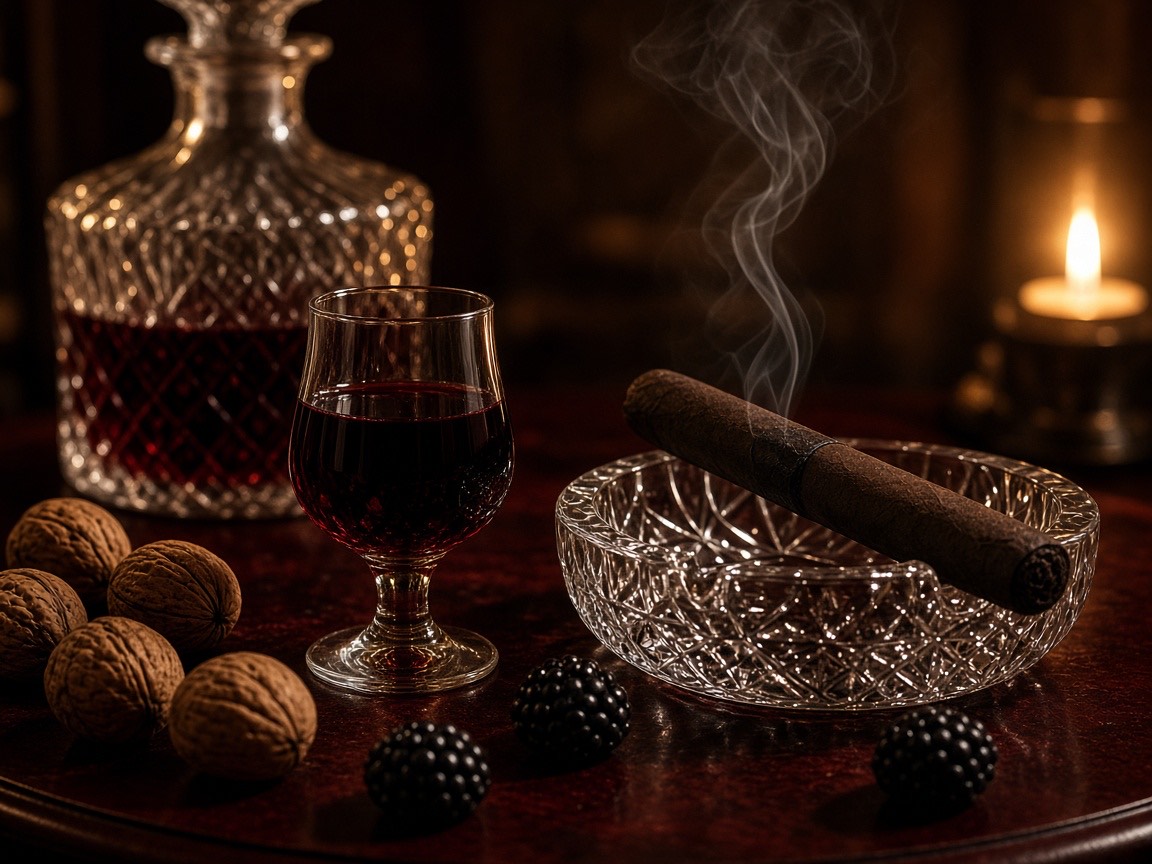
Port was one of the very first drinks we paired on this site. Our early reviews matched Taylor Fladgate tawny with a Partagás, and a 1983 Warre's vintage with a Cohiba. It's still one of the most satisfying after-dinner pairings you can make. Port is sweet, rich and lower in alcohol than spirits, so it plays beautifully with a full-flavoured cigar.
Origin
Port's story is as much English as Portuguese. In the late 1600s, England was frequently at war with France and looked to Portugal for wine instead. The Methuen Treaty of 1703 cut tariffs on Portuguese wines, and British merchants flooded into the city of Porto. To help the red wines of the Douro Valley survive the voyage to England, shippers added brandy. They eventually discovered that adding it during fermentation produced a richer, sweeter and more stable wine.
In 1756, the Marquis of Pombal officially demarcated the Douro Valley to protect port's quality. It was one of the first demarcated wine regions in the world. Many of the great port houses still carry British names: Taylor's (founded 1692), Warre's (1670), Croft, Graham's, Dow's, Cockburn's and Sandeman.
Where It's Traditionally Made
Port's grapes are grown in the Douro Valley in northern Portugal, on dramatic terraced slopes of schist above the Douro river. The summers are scorching and the vineyards are some of the most beautiful (and hardest to work) in the world. The valley has three sub-regions: Baixo Corgo, Cima Corgo, and the remote Douro Superior.
Traditionally, the young wine was shipped downriver in flat-bottomed boats called rabelos to the port lodges of Vila Nova de Gaia, across the river from Porto, where it was aged and bottled. Many houses still age their wines there.
How It's Made
More than 80 grape varieties are permitted, but five are considered the best: Touriga Nacional, Touriga Franca, Tinta Roriz (Tempranillo), Tinta Barroca and Tinto Cão. Many top ports are still made by crushing grapes underfoot in shallow stone tanks called lagares, a gentle method that extracts colour and tannin quickly.
The key step is fortification. After only two or three days of fermentation, while the wine is still sweet, it's run off and mixed with a clear grape spirit called aguardente (about 77% alcohol), roughly one part spirit to four parts wine. The spirit kills the yeast and stops fermentation, leaving natural grape sugar in the wine and raising the alcohol to around 19 to 22%.
What happens next determines the style:
- Ruby – aged briefly in large vats to keep its bright, fruity character. "Reserve" rubies are a step up.
- Late Bottled Vintage (LBV) – wine from a single year, aged 4 to 6 years in wood before bottling. A great-value taste of vintage style.
- Vintage – made only in the best years, when a house "declares" a vintage. It spends about two years in wood, then ages for decades in the bottle. It throws a sediment and needs decanting.
- Tawny – aged in small casks, where slow oxidation turns it amber-brown and nutty. 10, 20, 30 and 40 year tawnies are labelled by an approximate average age.
- Colheita – a single-vintage tawny aged at least 7 years in wood.
- White and Rosé – lighter styles, usually served chilled or in cocktails.
What It Tastes Like
Ruby, LBV and vintage ports are deep purple and full of dark fruit: blackberry, plum, cassis and cherry, with chocolate, violet and spice. Old vintage ports soften into dried fruit, leather and cedar. Tawny ports are a completely different experience: caramel, toffee, walnut, almond, dried fig, orange peel and butterscotch, getting more concentrated with age.
What to Look for in a Cigar
Port's sweetness and lower alcohol give you a lot of freedom. The rule of thumb: match ruby and vintage ports with rich, dark cigars, and tawnies with nutty, medium-bodied ones.
Ruby, LBV and vintage: Go medium-full to full. Maduro and dark Habano wrappers bring cocoa, espresso and earth that turn the port's dark fruit into something like chocolate-covered cherries. Try a Padrón 1926 Serie No. 9 Maduro, or a Partagás Serie D No. 4 for a classic Cuban pairing.
Tawny and colheita: Step back to medium. Cuban, Cameroon and Connecticut wrappers with cedar, toasted nuts, cream and light spice complement the tawny's nutty caramel. A Montecristo Edmundo is a lovely match for a 10 or 20 year tawny.
Richness: Port is sweet and mouth-coating, so avoid cigars that are themselves very sweet or heavily flavoured. You want the cigar to provide earthiness or spice for balance, not more sugar.
A few tips:
- Serve port slightly below room temperature, around 16 to 18°C. Tawnies can even be lightly chilled in summer.
- Port's lower alcohol makes it a great choice for a long cigar, like a churchill or double corona, over a long evening.
- Once opened, ruby and vintage ports fade within days to a week. Tawnies last a few weeks.
Browse our port and cigar pairings, including Taylor Fladgate 10 Year Tawny with Partagás Serie E, Warre's 1983 Vintage with Cohiba Robusto and Dow's 1985 Vintage with Montecristo Edmundo.