Mezcal: Origin, Production, and Cigar Pairing
If tequila is agave in its cleanest form, mezcal is agave with the campfire still burning. Its smoky, earthy, wild character has won a devoted following, and for cigar smokers it's an intriguing pairing. Think of it as the Islay Scotch of the agave world: smoke meeting smoke.
Origin
The word mezcal comes from the Nahuatl mexcalli, meaning "cooked agave." People in Mexico have roasted and eaten agave for thousands of years, and fermented its sap into pulque long before the Spanish arrived. Most historians believe agave was first distilled after Spanish contact in the 1500s. One theory suggests Filipino sailors on the Manila galleons introduced simple stills to Mexico's Pacific coast. Others argue for older, pre-Hispanic distillation. The debate is still lively.
Technically, tequila is a type of mezcal, the one from Jalisco made with blue agave, that went its own way. Mezcal remained a rural, village spirit made in small batches for local celebrations. It received its own designation of origin in 1994. Over the last two decades it has gone from a regional curiosity to a cocktail-bar staple.
Where It's Traditionally Made
The mezcal designation of origin covers several Mexican states, including Oaxaca, Durango, Guerrero, San Luis Potosí, Zacatecas, and parts of Guanajuato, Tamaulipas, Michoacán and Puebla. Oaxaca is the undisputed heart of mezcal and produces the vast majority of it, especially around Santiago Matatlán, known as the "world capital of mezcal."
Mezcal is still mostly made by family producers, called mezcaleros, at small rustic distilleries known as palenques. Recipes and techniques are often handed down through generations.
How It's Made
Unlike tequila, mezcal can be made from many species of agave. Espadín is by far the most common because it matures relatively quickly, in around six to eight years. Wild and semi-wild agaves like tobalá, tepeztate and madrecuixe can take 12 to 25 years or more to mature. They produce smaller, pricier and often extraordinary batches.
The defining step is the roast. The agave hearts (piñas) are cooked in a conical pit dug into the ground, lined with wood and volcanic stones heated until they glow. The piñas are piled on top, covered with agave fibres and earth, and left to roast for several days. This is where mezcal's signature smoke comes from.
The roasted agave is crushed, traditionally by a tahona stone wheel pulled by a horse or donkey, or even pounded by hand with wooden mallets. It's then fermented naturally with wild yeasts in open wooden vats, sometimes in vats made of stone or animal hide. Finally it's distilled, usually twice, in small copper or clay pot stills.
Mexican rules define three categories based on method:
- Mezcal – modern equipment allowed
- Mezcal Artesanal – pit-roasted, traditional crushing and fermentation, copper or clay pot stills
- Mezcal Ancestral – the most traditional of all: pit-roasted, hand-pounded or tahona-crushed, and distilled in clay pots over direct fire
Most mezcal is bottled unaged (joven or blanco), because producers want the agave to speak. Reposado and añejo versions do exist.
What It Tastes Like
Smoke is the headline, but good mezcal is far more than smoke. Espadín typically shows roasted agave, smoke, citrus, tropical fruit and black pepper. Tobalá can be floral and sweet, tepeztate intensely herbal and spicy, and other wild agaves earthy, mineral or even a little funky. Mezcals are often bottled at 45% to 50% alcohol or more, so they're powerful.
What to Look for in a Cigar
As with peated Scotch, you can either match mezcal's smoke or balance it.
Strength: Medium-full to full. Mezcal's proof, smoke and intensity will flatten a mild cigar.
Wrapper: Maduro wrappers, especially Mexican San Andrés and Connecticut broadleaf, are excellent. Their natural sweetness and cocoa soften the smoke and bring out the roasted agave's sweetness. Mexican San Andrés tobacco adds a nice element of shared heritage too.
Flavours to look for: Dark chocolate, espresso, molasses, earth and a little pepper. Sweet, chocolatey cigars contrast the smoke beautifully. Earthy, peppery cigars complement it for a bolder, more intense pairing.
Example cigars:
- Drew Estate Undercrown Maduro – a Mexican San Andrés wrapper with cocoa, coffee and earth. A great all-round mezcal cigar.
- Perdomo Reserve 10th Anniversary Maduro – full-bodied and sweet, with espresso and dark chocolate to balance the smoke of an espadín.
- Padrón 2000 Maduro – a medium-full Nicaraguan with cocoa and earth, sturdy enough for a high-proof wild agave mezcal.
A few tips:
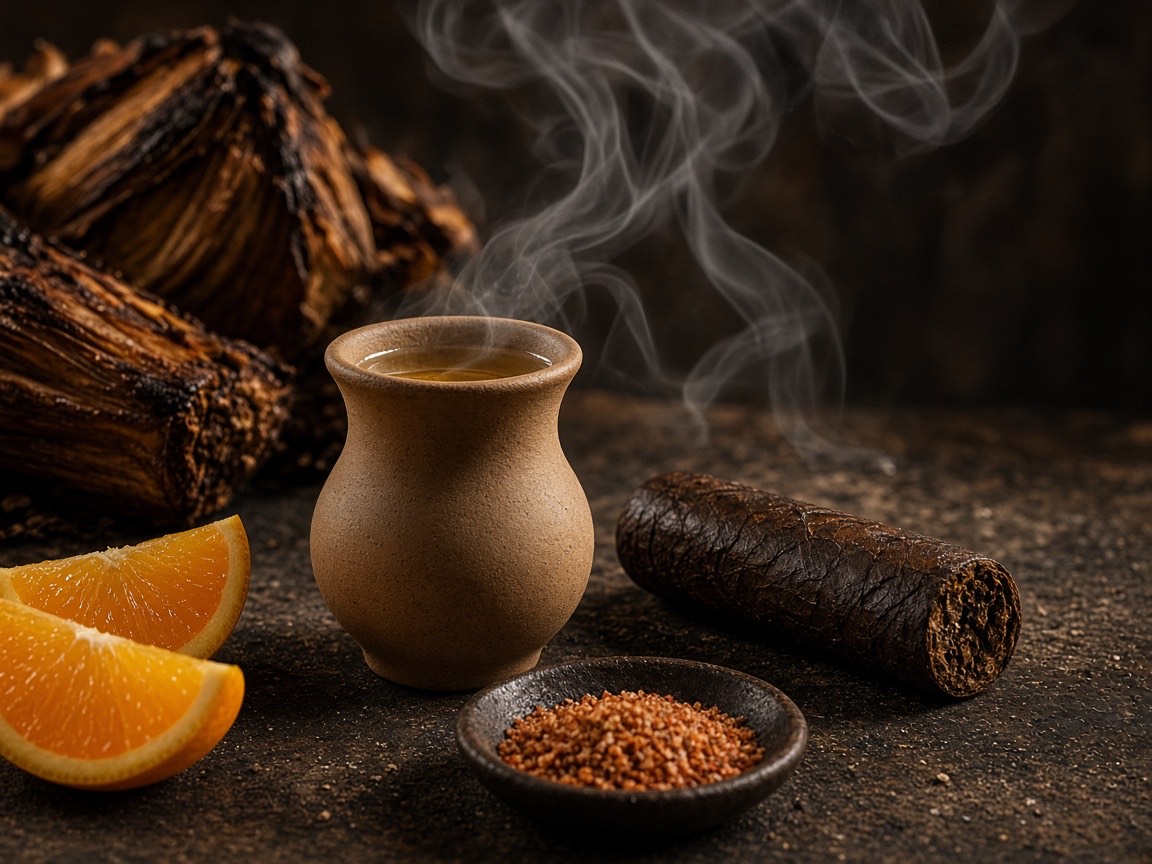
- Sip mezcal slowly from a small glass or a traditional clay copita. In Oaxaca it's often served with orange slices and sal de gusano (agave worm salt).
- A single smoky mezcal can easily last you through a robusto. Small sips go a long way.
- Start with an espadín before exploring the wild agaves. It's the easiest way to learn the baseline.
Prefer something cleaner? Read our tequila pairing guide, or see how smoke-on-smoke pairing works in our Scotch guide.